
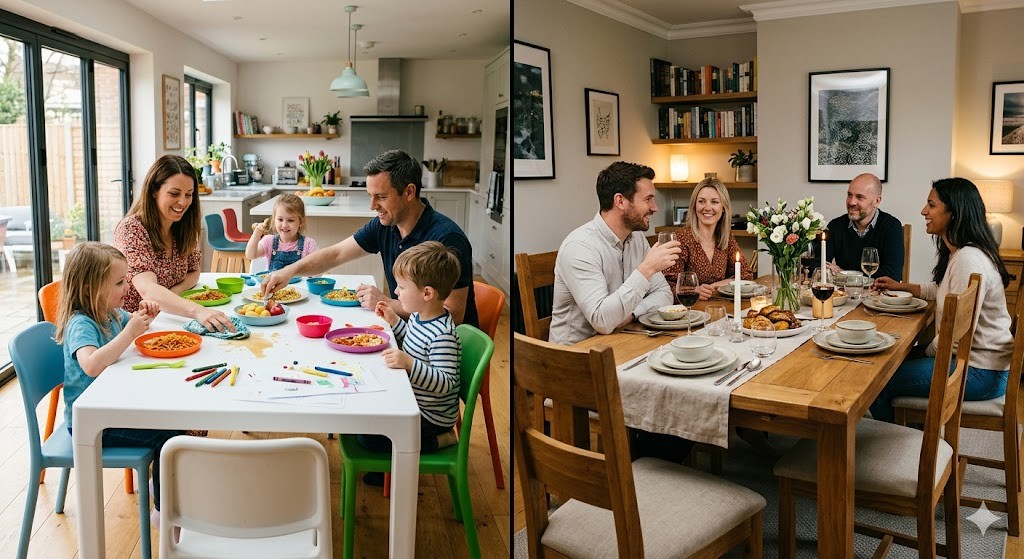
Let’s be honest: the dining table is where life really happens. It’s where coffee-fueled debates turn into giggle fests, where kids spill juice like it’s a sport, and where midnight snacks taste way better than they should. So when it’s time to pick between a plastic or wooden dining table, the choice isn’t just about furniture—it’s about how you live.
Plastic may not have the old-school brag of polished wood, but it’s got serious game: stylish, low-maintenance, and light enough to move when you feel like a spontaneous room refresh. Wood, on the other hand, brings that timeless, heirloom vibe that makes you feel a little fancier every time you sit down. Ready to see who really owns the spotlight? Let’s break it down.
Why Plastic Dining Tables Are Winning Hearts
1. Budget-Friendly and Stylish
Plastic dining tables give you the look without the hefty price tag. Whether you want bold colors or sleek modern designs, there’s a plastic table for every vibe.
2. Lightweight and Portable
Need to rearrange furniture or move apartments? Plastic tables are feather-light compared to heavy wooden ones. Shift them solo—no sweat or extra hands required.
3. Low Maintenance
Spills, stains, or kids’ art projects? No problem. A quick wipe-down keeps plastic tables spotless—no polishing or varnish needed.
4. Weather-Resistant
Plastic won’t warp, crack, or fade in humidity or sunlight, making it perfect for indoor and outdoor use—balcony brunches, anyone?
5. Eco-Friendly Options
Modern recycled-plastic tables are made from repurposed materials and are fully recyclable, giving you an eco-smart alternative to timber.
The Classic Appeal of Wooden Dining Tables
1. Timeless Elegance
Wood brings warmth and a natural charm that’s hard to beat. If you love traditional or rustic interiors, a wooden dining table is a classic statement piece.
2. Durability (with Care)
A well-crafted, solid wood table can last decades—if you’re ready for the upkeep. Regular polishing and protection from moisture are a must.
3. Sturdy and Stable
Heavier than plastic, wooden tables offer a strong, grounded feel, which some people love for a formal dining room.
Quick Comparison Table
| Feature | Plastic Dining Table | Wooden Dining Table |
| Cost | Affordable | Expensive (especially hardwood) |
| Weight | Lightweight, easy to move | Heavy, hard to shift |
| Maintenance | Wipe and go | Needs polishing and care |
| Style Options | Wide variety of colors/designs | Mostly traditional or classic |
| Weather Resistance | Excellent for outdoors | Sensitive to humidity and pests |
| Longevity | 8–12 years (quality plastic) | Decades with proper care |
The Verdict
If you want style, convenience, and value, plastic dining tables are the clear winner for modern homes, small spaces, or families with kids. They’re light, affordable, and nearly maintenance-free.
However, if you’re after a heirloom piece that radiates natural beauty and you don’t mind the price or upkeep, a wooden table still holds timeless appeal.
Final Takeaway:
For most urban lifestyles—especially if you love easy care, flexibility, and contemporary style—a high-quality plastic dining table is the smart, budget-friendly choice. But if you have a spacious home and cherish classic elegance, wood can still steal the show.
Choose what fits your lifestyle best—and get ready to create memories around a table that feels just right for you.