
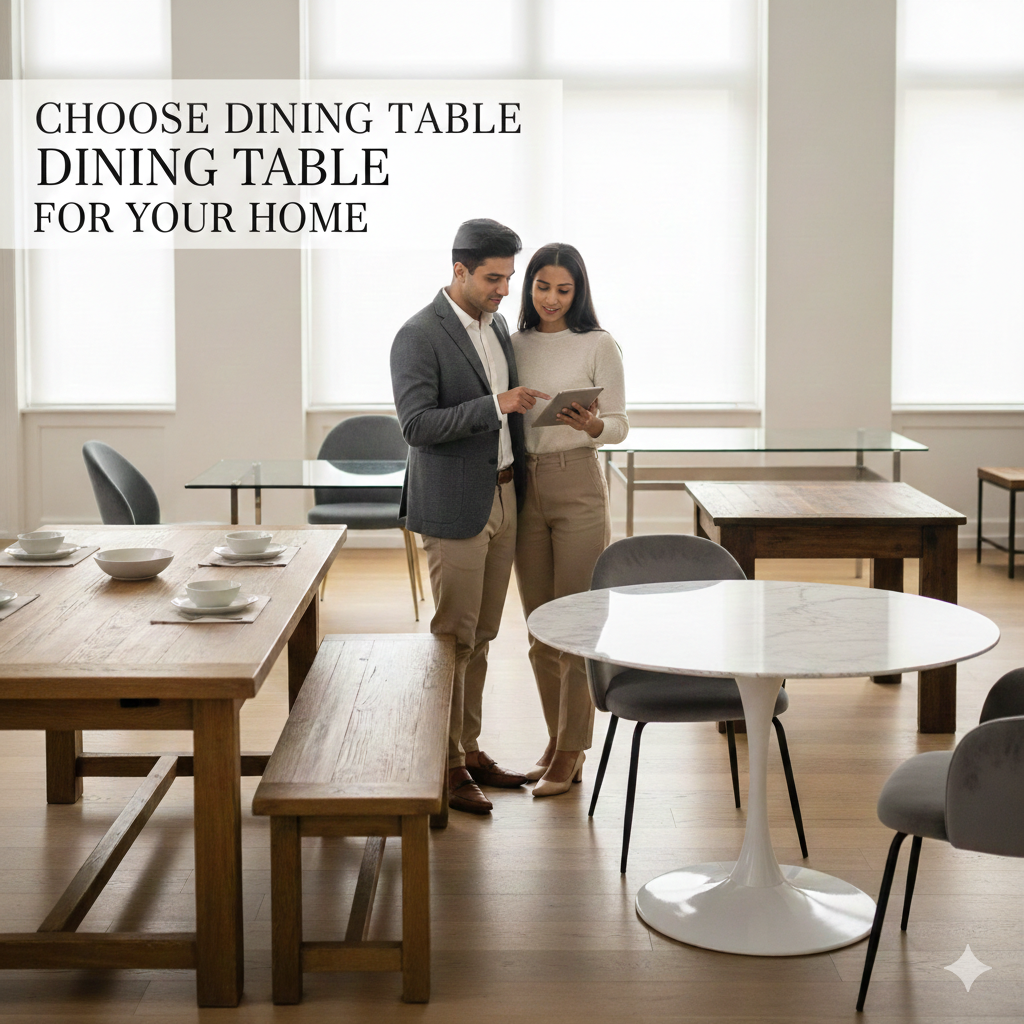
Your dining table is more than a piece of furniture — it’s the stage for family breakfasts, weekend homework, festive feasts, and those long, tea-fueled catch-ups. Picking the right table means balancing function, scale, and style so your space looks beautiful and works hard. This manual makes that choice simple, practical, and (dare I say?) fun.
Quick checklist — are you ready?
- Know your room’s measured dimensions (length, width, and door swing).
- Decide how many people you want to seat regularly.
- Pick a shape that suits traffic flow and social needs.
- Choose a material that matches lifestyle (kids? pets? heavy use?).
- Budget and maintenance expectations set.
1. Measure like a pro (don’t guess)
Start by measuring the dining area — not just the table nook but the whole room. Important numbers:
- Minimum clearance: Leave at least 90 cm (36 in) between the table edge and walls/obstacles so chairs can be pulled out comfortably.
- Standard table height: 71–76 cm (28–30 in) — this works with most dining chairs.
- Space per person: Allow roughly 61 cm (24 in) of tabletop width per diner for elbows and plates.
Common table sizes (guide):
- 4-seater round/square: 90–120 cm (36–48 in) diameter/side.
- 6-seater rectangular: 152–183 cm (60–72 in) length.
- 8-seater rectangular: 213–244 cm (84–96 in) length.
Use these to test scale: tape out the perimeter on your floor to visualize.
2. Choose the right shape for the room + conversation
Different shapes do different jobs — socially and spatially.
- Rectangular: Classic and flexible. Great for long rooms and large families. Pairs well with benches or mixed chair styles.
- Round: Fantastic for small to medium spaces — no corners, and conversation is effortless. Best for 2–6 people.
- Square: Cozy and symmetrical. Works in square rooms or as breakfast tables.
- Oval: Softer edges than rectangles; fits narrow rooms while keeping the conversational benefits of round tables.
- Extendable/Drop-leaf: The space-saver’s hero. Compact daily, expandable for guests.
Tip: Put a round table in tight spots or when you want a communal vibe. Use rectangular tables for formality and capacity.
3. Match style to your home (and your life)
Your table should look right, but also survive real life.
- Modern minimal: Clean lines, slim legs, glass or lacquer finishes. Best for uncluttered, contemporary homes.
- Farmhouse / Rustic: Solid wood, distressed finishes, trestle or plank tops. Durable and family-friendly.
- Mid-century: Tapered legs, walnut tones — great for vintage-modern mixes.
- Industrial: Metal bases + reclaimed wood tops — rugged, cafe-chic.
- Scandinavian: Light woods, rounded edges, airy feel.
Ask: Do you want the table to stand out or blend in? Accent piece = bold finish; background piece = neutral tone.
4. Materials: pros, cons, and lifestyle fit
Choose a top material that matches how you live.
- Solid wood — warm, repairable, ages beautifully. Needs protection from water rings.
- Engineered wood / Veneer — budget-friendly, consistent surface, less expansion with humidity.
- Glass — visually light, great for small rooms, but shows smudges and can be noisy.
- Marble/Stone — luxe and durable but heavy and porous; needs sealing.
- Metal — sturdy; pairs well with industrial looks; can feel cold.
- Laminate — easy-clean, affordable, lots of finishes.
Family + pets tip: If you have kids or pets, favor durable tops (treated wood, laminate, or stone with seal) and finishes that hide scratches.
5. Base & leg styles — function matters
The table base affects legroom and chair placement.
- Four legs: Classic, easy to pair with chairs. Check leg placement so you don’t kick them.
- Pedestal/base column: Great for round tables — excellent knee clearance.
- Trestle/bench-friendly bases: Perfect when you want bench seating.
- X-frame or metal trestles: Sturdy; industrial aesthetic.
6. Seating: chairs, benches & mixes
- Chair height: Seat height should be approx. 45–48 cm (17.5–19 in) for standard tables.
- Benches: Space-efficient and family-friendly; slide under table when not in use.
- Mix-and-match: One long bench + two end chairs = modern, layered look.
7. Care & maintenance (keep it looking new)
- Wipe spills immediately.
- Use placemats for daily protection; coasters for drinks.
- For wood: periodic oil or wax, depending on finish.
- For marble: sealants prevent stains.
- Avoid harsh chemicals; choose pH-neutral cleaners.
8. Budgeting & buying tips
- Set a realistic budget: 30%–40% of your dining room budget should go to the table if you want longevity.
- Try before you buy: Test chair-to-table comfort in person where possible.
- Measure twice: Double-check doorways and lift capacity if the table is heavy.
- Look for warranties and return policies.
Quick style pairings (for clickable sections or Pinterest pins)
- Rustic reclaimed wood table + mixed upholstered chairs = cozy eclectic.
- Sleek glass top + minimalist metal legs = urban modern.
- Oval walnut table + cane-back chairs = mid-century revival.
- White-lacquer table + pastel chairs = Scandinavian lightness.
FAQs — fast answers
Q: Can a round table seat 6?
A: Yes, larger rounds (≈120 cm/48 in +) can seat 6, but comfort depends on diameter and leg style.
Q: What’s the best table for a narrow dining room?
A: A narrow rectangular or oval table keeps traffic flowing; consider an extendable option for guests.
Q: How much clearance do I need for a dining chair?
A: Allow at least 90 cm (36 in) from the table edge to the wall; the seat height of chairs should be ~45–48 cm.