

How to Choose the Right Fit for Your Family
Buying a dining table often feels exciting until it actually arrives at home. Suddenly, the room feels crowded, chairs don’t pull out properly, or family members feel cramped during meals. In most cases, the problem isn’t the design or material, it’s the size.
In Indian homes, where space planning is crucial, and dining areas often serve multiple purposes, choosing the right dining table size matters more than people realise. This guide breaks down dining table sizes, seating capacity, and space planning in a simple, practical way so you can make a confident decision.
Why Dining Table Size Is More Important Than Design
A dining table is used every single day. It needs to fit both your family size and your available space comfortably. A table that looks beautiful but feels awkward to use quickly becomes frustrating.
The right dining table size ensures:
- Comfortable seating for everyone
- Easy movement around the table
- Better use of space in apartments and homes
- Long-term satisfaction, not buyer’s regret
Not just limited to sizes, you can pick from the trending dining table colors here.
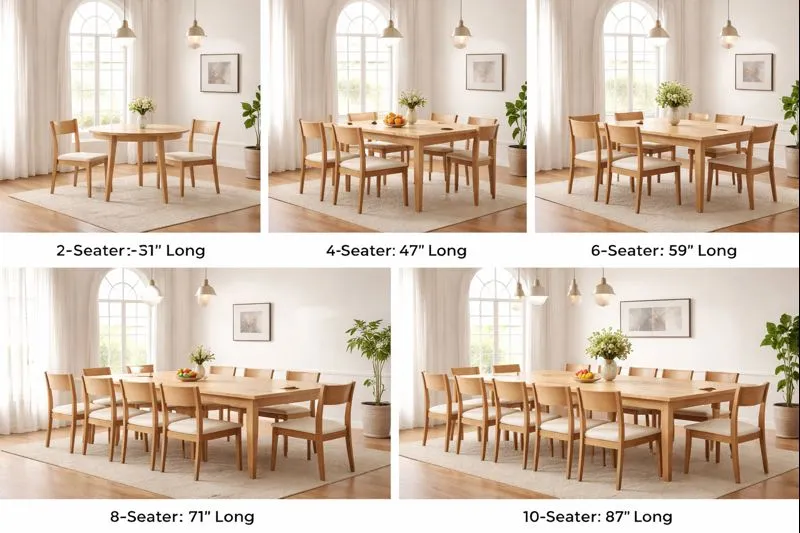
Standard Dining Table Sizes Based on Seating Capacity
2-Seater Dining Table
Best for couples, studio apartments, or compact kitchens.
Typical dimensions:
Length: 75–90 cm
Width: 75–80 cm
This size works well when space is limited and daily usage is minimal.
4-Seater Dining Table
The most common and practical choice for Indian families.
Typical dimensions:
Length: 110–120 cm
Width: 80–90 cm
It comfortably accommodates a family of four while still fitting into most dining spaces.
6-Seater Dining Table
Ideal for medium to large families or homes that frequently host guests.
Typical dimensions:
Length: 150–180 cm
Width: 90 cm
This size requires a slightly larger dining area but offers better comfort during family meals and gatherings.
8-Seater and Larger Dining Tables
Suitable for large families, villas, or homes with dedicated dining rooms.
Typical dimensions:
Length: 200 cm and above
Width: 100 cm or more
These tables work best where space is not a constraint.
How Much Space Should You Leave Around a Dining Table?
This is where most people make mistakes.
You should leave at least 90 cm of free space around the table on all sides so chairs can move comfortably. If your dining area is also a passageway, you may need even more clearance.
In smaller homes, pairing dining tables with armless or lightweight plastic chairs makes movement easier and saves space. Many families prefer this setup for daily use.
Lightweight or heavyweight? Find different types of plastic chairs here
Choosing Dining Table Size Based on Room Shape
The shape of your dining area plays a big role in choosing the right table.
- Rectangular rooms suit rectangular tables
- Square rooms work well with square or round tables
- Narrow spaces benefit from compact or extendable tables
Always measure your room carefully before finalising the table size.
Dining Table Height and Seating Comfort
Most standard dining tables have a height of around 75 cm, which works well with standard dining chairs.
If you plan to mix chairs from different materials, especially plastic chairs, ensure the seat height allows comfortable leg space.
Dining Tables for Daily Use vs Occasional Use
Not every dining table is used the same way.
For daily use:
- Choose practical sizes
- Focus on comfort and durability
- Avoid oversized tables that restrict movement
For occasional or guest use:
- Extendable or foldable tables can be useful
- Stackable chairs offer flexibility
This approach helps balance comfort with space efficiency.
Common Mistakes People Make When Choosing Dining Table Size
Some common errors include:
- Choosing a table size without measuring the room
- Ignoring chair clearance space
- Buying larger tables ‘just in case’
- Not considering the number of daily users
Avoiding these mistakes can save both space and money.
How Dining Tables and Chairs Should Work Together
A dining table and chairs should be chosen as a combination, not separately. Chair width, armrests, and stacking ability affect how comfortable the dining area feels.
Many households today pair dining tables with plastic chairs because they are lightweight, easy to maintain, and flexible for everyday use.
If you’re planning a practical setup, refer to the plastic chair buying guide for better clarity.
Final Advice Before You Buy
Before purchasing a dining table:
- Measure your space carefully
- Match the size to your family’s daily needs
- Think about chair movement and comfort
- Choose functionality over appearance
A well-sized dining table improves daily life far more than an oversized or undersized one.
FAQs – Dining Table Sizes
- What is the ideal dining table size for a family of four?
A 4-seater dining table with a length of around 110–120 cm works well for most Indian homes. - Can plastic chairs be used with dining tables?
Yes, plastic chairs are commonly used with dining tables due to their lightweight design and ease of maintenance. - How much space should be left around a dining table?
At least 90 cm on all sides for comfortable chair movement. - Is a bigger dining table always better?
No. Bigger tables can make spaces feel cramped if the room size doesn’t support them.