
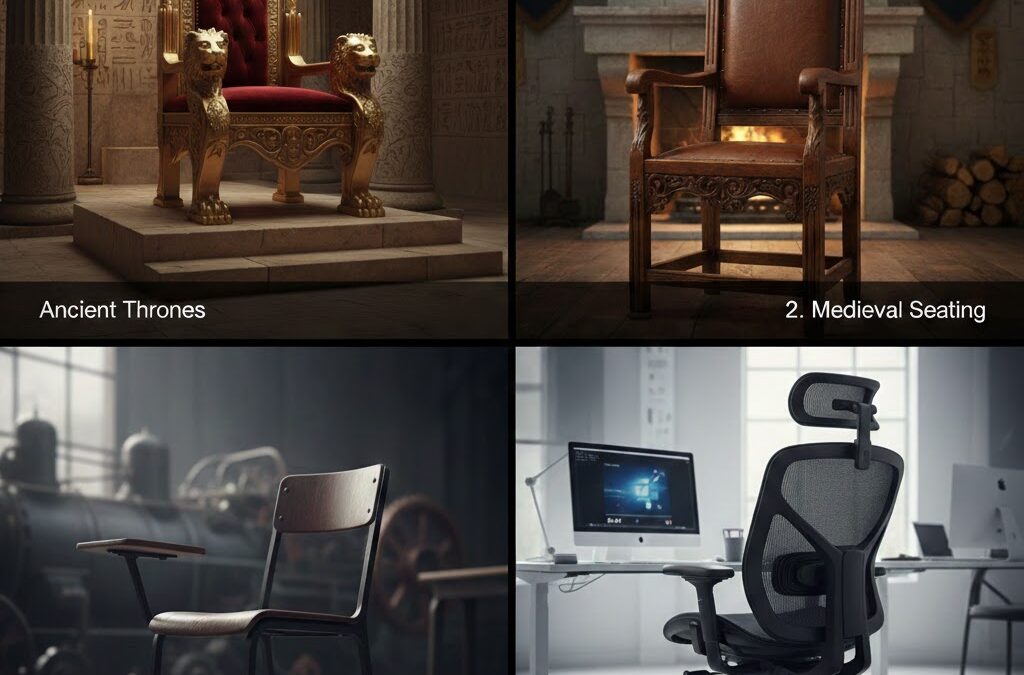
From Ancient Thrones to Modern Ergonomic Seating
Chairs are essential to human life, yet their design and purpose have evolved dramatically over centuries. From grand thrones symbolizing power to scientifically engineered ergonomic chairs that support human posture, the journey of chair design reflects societal, technological, and cultural transformations. Let’s explore the evolution of chair design and how it has shaped our modern seating experience.
1. The Throne: A Symbol of Power and Authority
In ancient civilizations, chairs were not for everyone. They were symbols of status, reserved for rulers, religious figures, and elite members of society. The earliest known chairs date back to ancient Egypt (circa 2680 BCE), where pharaohs sat on ornately carved thrones made of wood, ivory, and precious metals. These thrones were high-backed and elaborately decorated, reinforcing their owners’ authority.
Similarly, in ancient Greece and Rome, aristocrats and officials used chairs like the klismos and curule seats. These designs influenced later European styles, establishing chairs as a mark of dignity rather than mere furniture.
2. The Middle Ages: Function Over Comfort
During the medieval period, chair designs became more functional but remained a privilege of the wealthy. Large wooden chairs, such as the Gothic throne, were heavy and featured intricate carvings, often seen in castles and churches. The common people sat on stools or benches, as chairs were still considered a luxury.
As craftsmanship improved, chairs became slightly more widespread, with noble households using the settle, a wooden bench with a high back, and armrests, providing more comfort and protection from cold stone floors.
3. The Renaissance and Baroque Periods: Art Meets Comfort
The Renaissance (14th–17th century) saw a significant shift in chair design, emphasizing aesthetics and comfort. Influenced by classical art and architecture, chairs became more refined, incorporating padded seats, upholstery, and curved armrests.
The Baroque period (17th–18th century) further embraced luxury, with highly ornate chairs like the Louis XIV throne chair, featuring elaborate carvings, gilded wood, and rich fabrics. This era set the foundation for chairs becoming accessible to the upper-middle class, leading to a greater variety of designs.
4. The Industrial Revolution: Mass Production and Accessibility
The 19th century’s Industrial Revolution revolutionized furniture making. With the advent of mechanized production, chairs became more affordable and widely available to the general public. This period saw the rise of bentwood chairs (notably the Thonet Chair), which used steam-bent wood to create lightweight and durable designs.
As factories produced chairs in large quantities, homes, offices, and public places became more furnished, shifting seating from a luxury to a necessity.
5. The Modern Era: Functionality and Ergonomics
The 20th century brought about innovative materials like metal, plastic, and molded plywood, allowing designers to experiment with new forms. Iconic chairs, such as the Eames Lounge Chair (1956) and Barcelona Chair (1929), introduced sleek, minimalist aesthetics while prioritizing comfort.
As research on human posture and workplace efficiency advanced, ergonomic chair designs became a priority. The 1970s and 80s saw the rise of task chairs with adjustable height, lumbar support, and reclining features, promoting better spinal health. The Herman Miller Aeron Chair (1994) revolutionized office seating with its breathable mesh back and adaptive support.
6. The Future of Chair Design: Smart and Sustainable Seating
Today, chair design continues to evolve with advancements in technology and sustainability. Smart chairs equipped with posture sensors, automatic adjustments, and AI-driven comfort features are emerging in workplaces and homes.
At the same time, eco-conscious furniture brands are pioneering sustainable seating solutions, using recycled materials, biodegradable plastics, and carbon-neutral production methods. The future of chair design prioritizes health, environmental responsibility, and adaptability to modern lifestyles.
Conclusion
From the exclusive thrones of ancient rulers to the ergonomic chairs supporting today’s tons of workforce, the evolution of chair design reflects societal progress, traditional upgrades, and technological innovation. As we move forward, seating will continue to integrate aesthetics, comfort, and sustainability, ensuring that the chairs of the future cater to both our well-being and the planet.
Chairs are no longer just places to sit—they are reflections of history, culture, and the way we live. What kind of chair do you spend most of your time in?