

Keep Them Looking New Without the Effort
Chairs are available in all different materials, from wood, steel, iron, ceramic, to plastic. But when it comes to plastic, no doubt, the talk is different. Plastic chairs are one of those everyday heroes we rarely talk about. They quietly serve us in dining areas, balconies, gardens, offices, cafés, and even during family gatherings. They’re lightweight, affordable, weather-friendly, and surprisingly versatile, so you can use them in every possible way and on any occasion.
Although plastic chairs are known for being low-maintenance, that doesn’t mean they’re maintenance-free. They do need care for their life-long partnership with you.
With just a little care and a few smart habits, your plastic chairs can stay clean, sturdy, and fresh-looking for years, giving you every possible reason to use them. And, the good news? You don’t need expensive products or time-consuming routines. Let’s walk through simple, practical ways to maintain plastic chairs without making it feel like a chore or a heavy-loaded task.
Why Plastic Chairs Still Need Regular Care
One of the biggest myths about plastic furniture is that it can be ignored completely. Over time, dust, moisture, food spills, sunlight, and daily wear can make plastic chairs look dull, stained, or even brittle. When left unattended, even high-quality plastic can lose its shine and strength, and is most likely to deteriorate.
Regular maintenance doesn’t just improve how your chairs look — it actually helps extend their lifespan. Clean chairs feel better to sit on, elevate the appearance of your space, and save you money by delaying replacements.
So, let’s check on a few simple ways to clean them up for their long life.
Start with Simple, Regular Cleaning
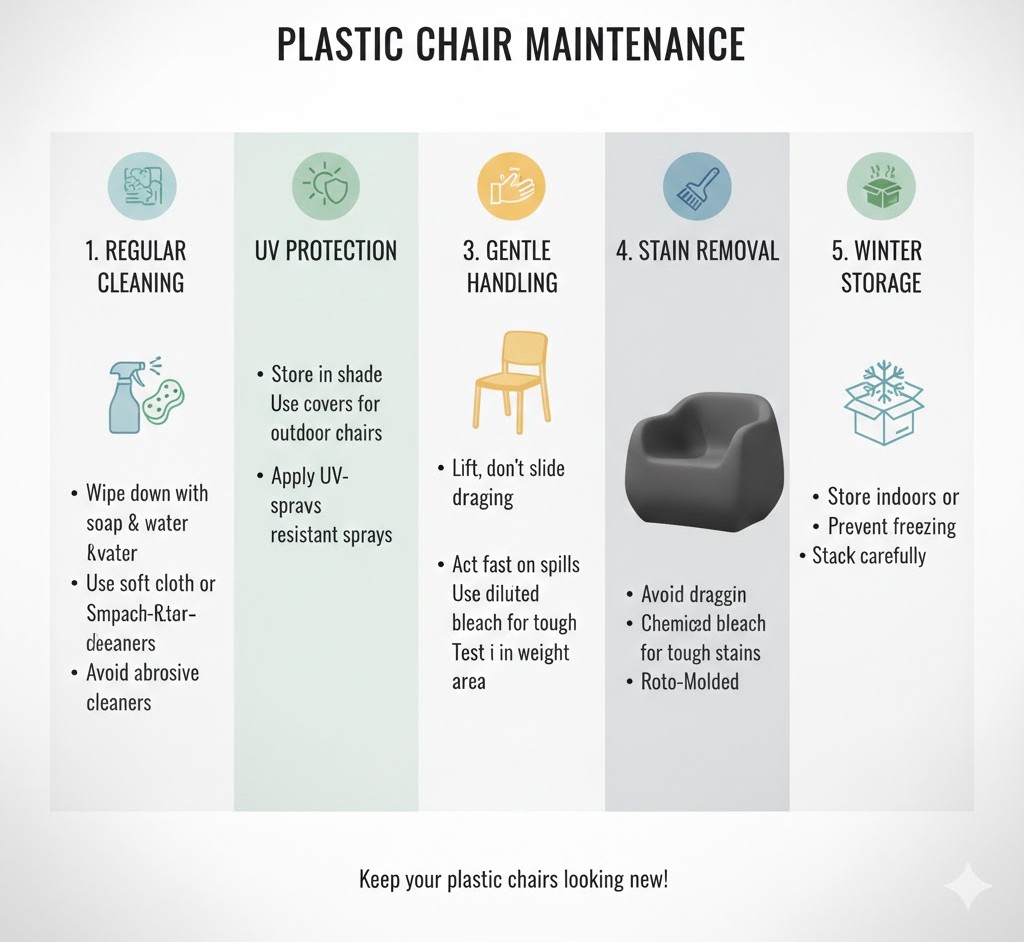
The easiest way to keep plastic chairs in good condition is by cleaning them regularly. You don’t need harsh chemicals or fancy cleaners. A simple mix of warm water and mild dish soap works wonders.
Once or twice a week, gently wipe the chair with a soft cloth or sponge. Pay extra attention to corners, armrests, and textured areas where dust tends to settle. If the chairs are outdoors, a quick rinse with clean water followed by air drying can prevent dirt from settling permanently.
Avoid using hard brushes or abrasive scrubbers, as these can leave scratches that trap dirt later on. Gentle cleaning done consistently is far more effective than aggressive scrubbing once in a while.
Handling Stains Without Stress
Spills happen — whether it’s tea during an evening chat or food during a family get-together. The key is not to panic or postpone cleaning.
For light stains, warm soapy water is usually enough. If a stain is stubborn, a simple home remedy like baking soda mixed with water can do the trick. Apply the paste, let it sit for a few minutes, then wipe gently. For outdoor chairs that develop mildew or discoloration, a diluted vinegar solution can help restore freshness.
The most important rule is to test any cleaning method on a small hidden area first. This ensures the plastic doesn’t discolor or weaken.
Sun Protection Makes a Big Difference
Plastic chairs placed outdoors often face the biggest challenge: direct sunlight. Continuous exposure to harsh UV rays can cause fading, dryness, and cracking over time.
If possible, place chairs in shaded areas like under a canopy, balcony cover, or tree. When not in use, covering them or moving them indoors can dramatically slow down wear and tear. UV-protective sprays designed for plastic furniture can also help maintain color and strength, especially for bright or white chairs.
A little sun protection today can save your chairs from looking tired and brittle tomorrow.
Handle Gently, Even if They’re Lightweight
Plastic chairs may feel sturdy, but they still need mindful handling. Dragging them across rough surfaces can scratch the legs and weaken joints over time. Lifting chairs instead of dragging them makes a noticeable difference in longevity.
If you stack chairs, do it carefully. Placing a soft cloth or paper between stacked chairs helps prevent scratches and scuff marks. Also, always respect the weight limit — standing on plastic chairs or overloading them can cause cracks that aren’t always visible immediately.
Dealing with Scratches and Scuff Marks
Minor scratches are common, especially in busy homes or commercial spaces. Thankfully, they’re often easy to fix.
Light scuff marks can sometimes be reduced by gently rubbing toothpaste or baking soda using a soft cloth. For deeper scratches, very fine-grit sandpaper can smooth the area when used carefully. Adding seat cushions or chair pads not only improves comfort but also protects surfaces from further damage.
Small fixes done early help maintain the overall look of the chair.
Seasonal Deep Cleaning Keeps Chairs Fresh
Every few months, or at the start of a new season, it’s a good idea to give your plastic chairs a deeper clean. Wash them thoroughly with soapy water, rinse well, and let them dry completely before use or storage.
While cleaning, take a moment to inspect for cracks, loose joints, or weakened areas. Early detection allows simple repairs before the damage worsens. This habit is especially helpful for chairs used outdoors or in commercial spaces.
Smart Storage Extends Lifespan
When plastic chairs are not in use, proper storage matters. Store them in a dry, cool area to prevent moisture buildup or warping. Avoid placing heavy items on top of stored chairs, as prolonged pressure can deform the plastic.
If space is limited and stacking is necessary, stack neatly and evenly. Good storage habits keep chairs ready for use whenever needed — without unpleasant surprises.
Final Thoughts: Small Habits, Long-Lasting Chairs
Plastic chairs are designed to make life easier, and maintaining them doesn’t have to be complicated. Simple routines like regular cleaning, mindful handling, sun protection, and seasonal checks can dramatically improve their durability and appearance.
Whether your plastic chairs are part of your dining setup, balcony seating, garden décor, or commercial space, a little care ensures they remain comfortable, attractive, and reliable for years. After all, furniture that serves you every day deserves a bit of attention too.